
Practice until you’re exam-ready
Six questions per section, climbing from a quick check to exam level. Built from your own material, aimed at your mistakes, and graded against a full worked solution. Mixed and final sets when you’re ready.
Coast turns your study material into lessons with Pedro, a tutor who remembers what you’ve learned, what clicked and where you got stuck. Across every course, for years.
How Coast works: add your study material and Pedro turns it into a roadmap. He teaches you from your own material and checks that you understand. He remembers what worked for you. And every section you master lifts the fog on your world map.
step 1
Drop in your notes or PDFs. Pedro plans a roadmap, and your first section is ready in minutes while the rest prepares in the background.
step 2
Each section is taught the way a tutor would: the why before the what, the figures from your material in the lesson, and questions that make you think.
step 3
Every section ends with a short check, then Practice takes you from quick questions to exam-level problems, graded with worked solutions. Already know it? Pedro places you further ahead.
step 4
Everything feeds your cognitive profile, so your next lesson, course and year start from who you are now.
In 1984, Benjamin Bloom found that students taught one-to-one by a tutor outperformed 98% of students taught in a classroom. For four decades, that advantage has belonged to the few who could afford it. Coast exists to give it to everyone.
Bloom, B. S. (1984). The 2 Sigma Problem. Educational Researcher, 13(6), 4–16.
Most AI chats start from zero. OMA, our memory architecture, gives Pedro what a human tutor builds up over years: a cognitive profile of how you think, updated after every lesson, workshop and conversation. It’s what makes a truly personal tutor possible for everyone.
OMA tracks how well you know each concept you’ve studied, based on evidence rather than guesses. An answer you get on your own counts for more than one Pedro had to hint at, so he knows what to build on and what to revisit.
When an analogy lands, OMA keeps it. The next time a related idea comes up, even in a different course, Pedro starts from what already worked for you instead of starting over.
how you learn bestA geometric picture first, then a worked example
Ask what you studied months ago and Pedro finds it: what was taught, what you wrote and when. Across every course you’ve taken, not just this chat.
What did I say about opportunity cost in Micro?
Microeconomics · Section 2 · 2 October
You wrote: “it’s the best thing you give up, not everything you give up.” Spot on. We used it again for comparative advantage a week later.
Where you slipped is remembered until you’ve shown it’s resolved, so Pedro checks it again at the right moment instead of letting it quietly slide.
Student OMA
Pedro reads both before every reply
Content OMA
Every conversation
Lessons, workshops and chat all update your profile.
Built for years
Designed to stay coherent across a whole degree, not a single chat.
Connects your courses
One profile across every subject, so Pedro can link today’s idea to one you learned elsewhere.
Six questions per section, climbing from a quick check to exam level. Built from your own material, aimed at your mistakes, and graded against a full worked solution. Mixed and final sets when you’re ready.
Ask anything about your material. Pedro answers from it and shows you the page it came from.
Pedro coaches you through real projects, or your own assignments, milestone by milestone, with live labs right in the lesson. You do the work; he guides. See the workshops
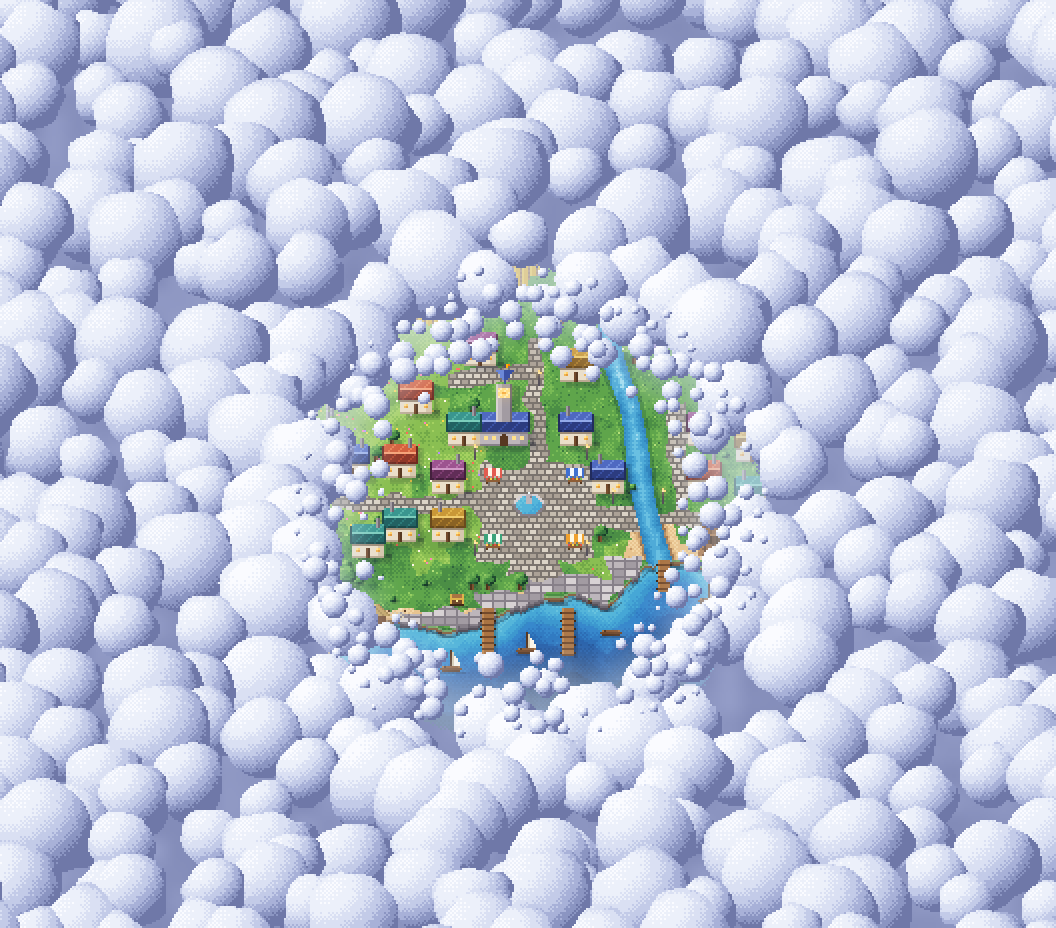
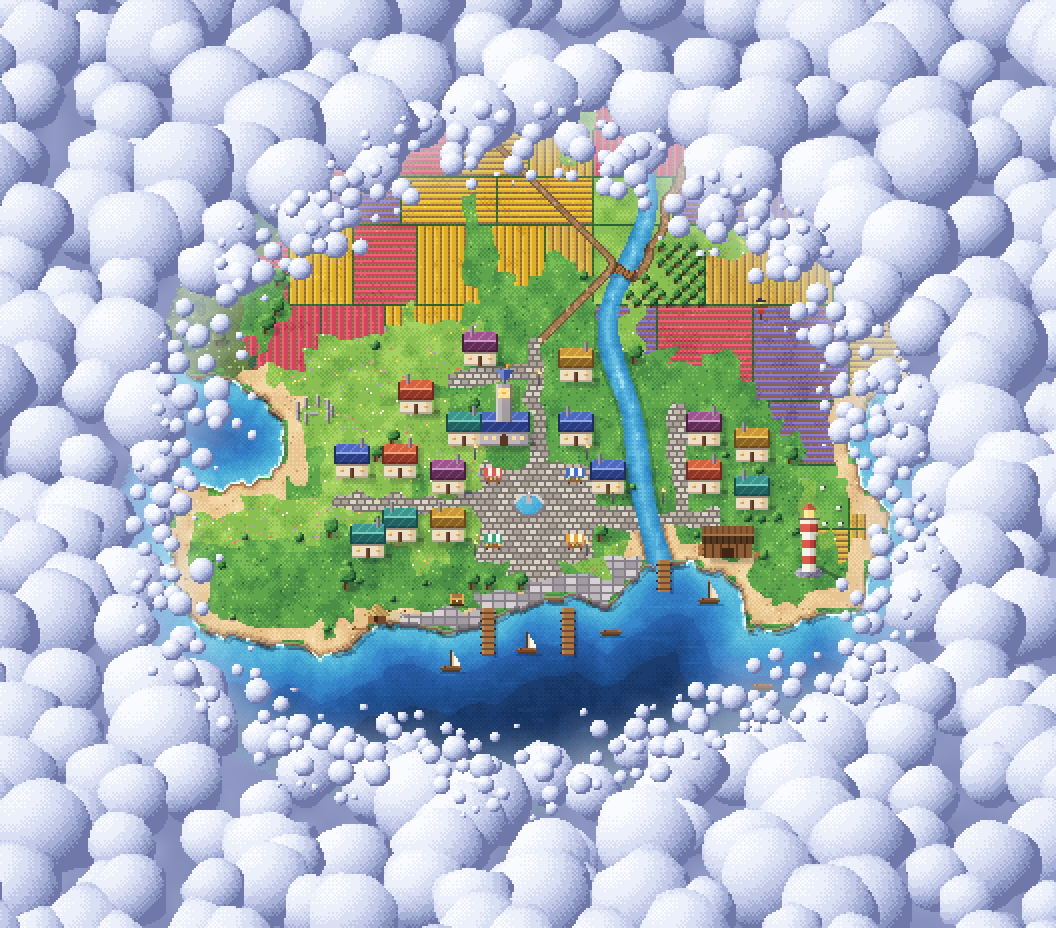
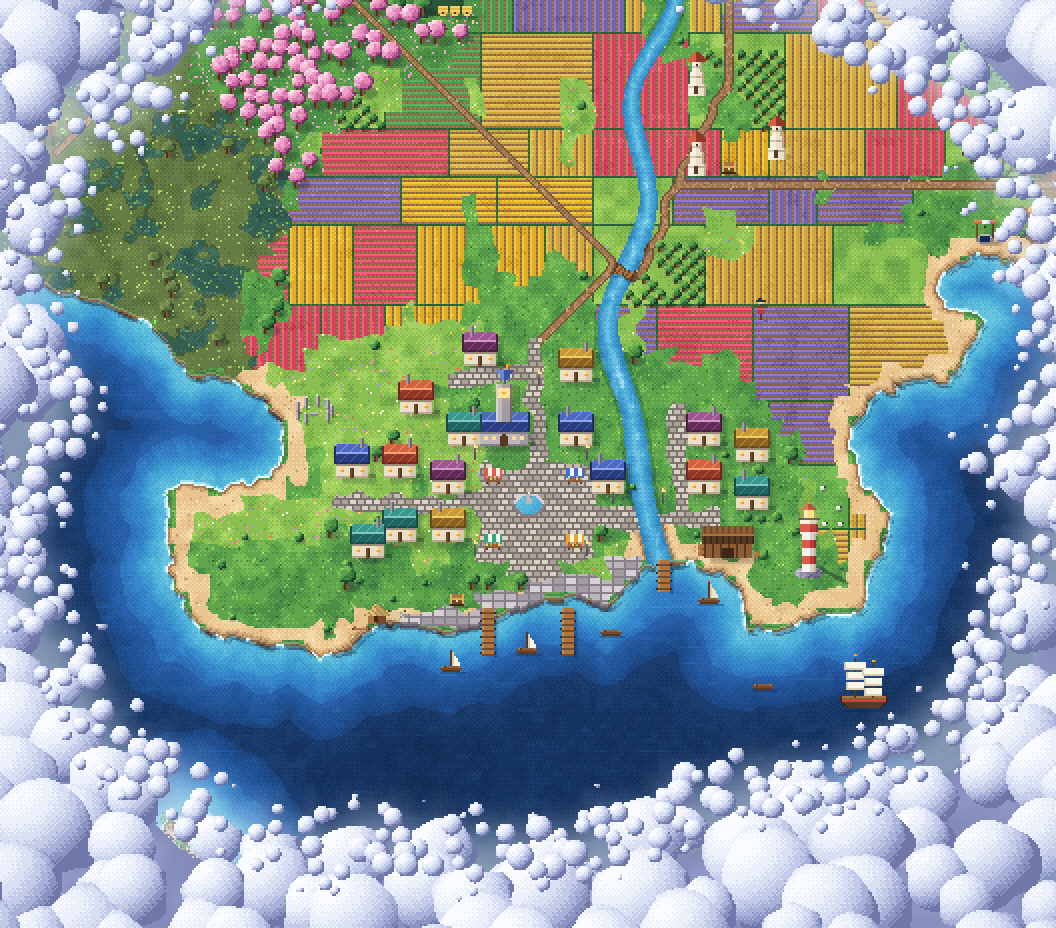
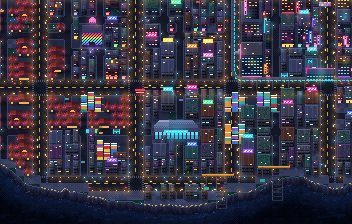
Every section you finish lifts the fog on your map, with rare finds hidden along the way. Chart all of the Lumen Reaches and a second world opens: Neon Meridian.
Already covered it? Pedro checks you section by section and places you where you actually are. No busywork.
About a course, something you studied weeks ago, or something new. General chat updates your profile too.
Focus sessions, streaks and XP turn showing up every day into a habit.
Hands-on projects, or your own assignments, with Pedro as your coach. You do the work yourself, right inside the lesson, with nothing to install. Free during the beta.

AI & ML · ~110 min

Physics · ~100 min

Neuroscience · ~85 min
Study skills · ~45 min
your own assignments
Upload a problem sheet, lab or coursework brief and Pedro turns it into a guided workshop. He splits it into steps, asks the questions that get you unstuck and checks your reasoning, but every answer is yours. You hand in work you understand.
live labs
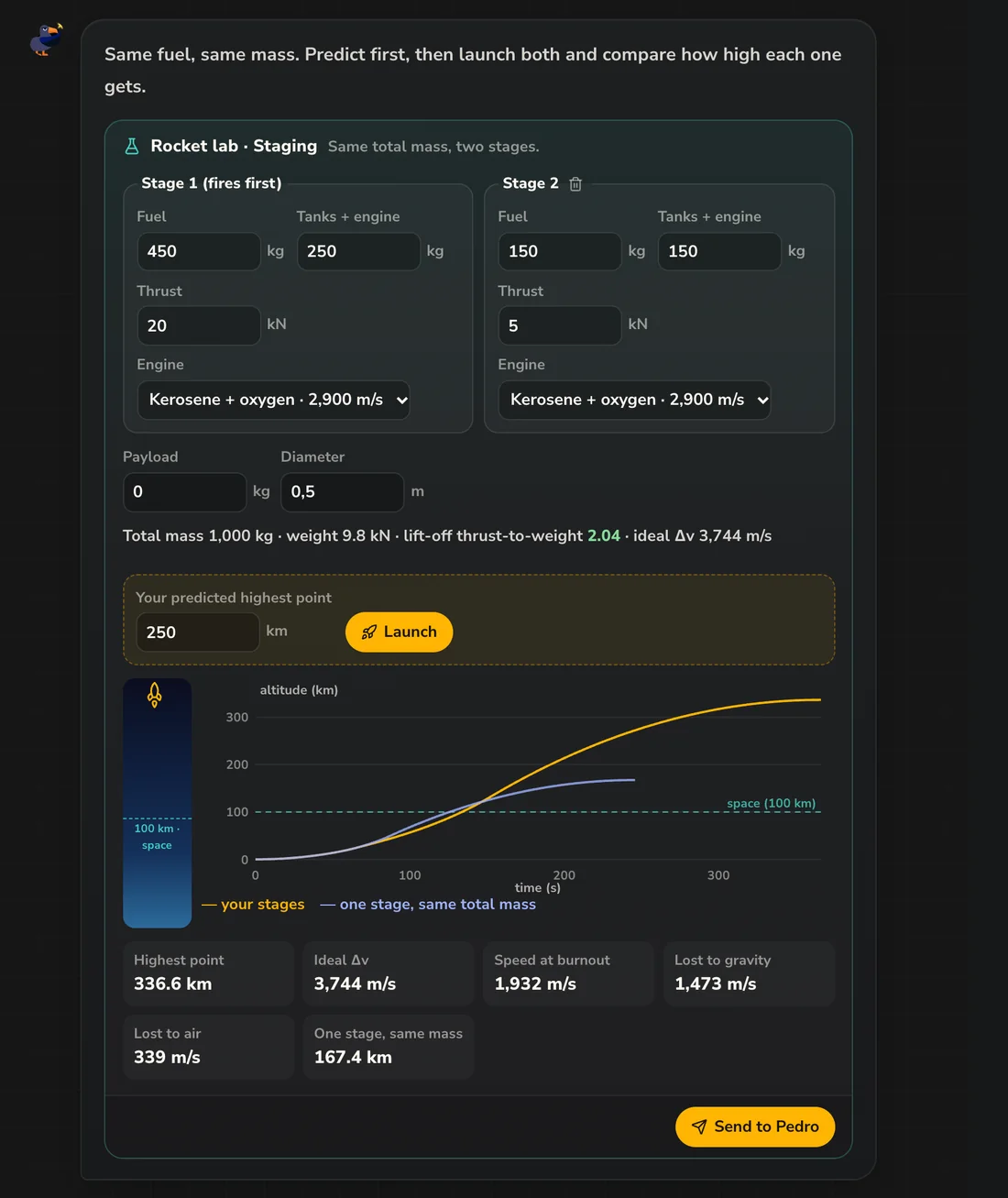
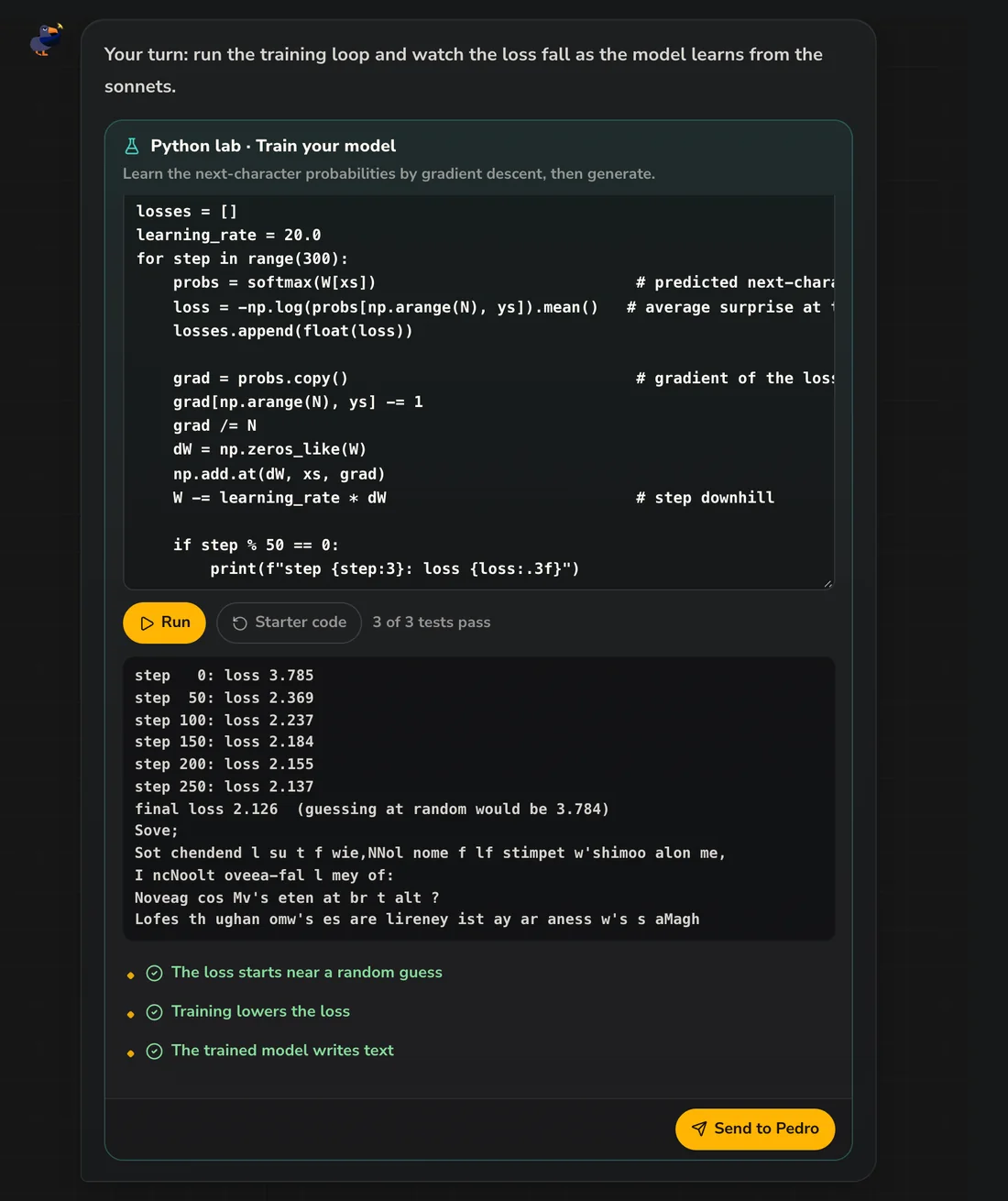
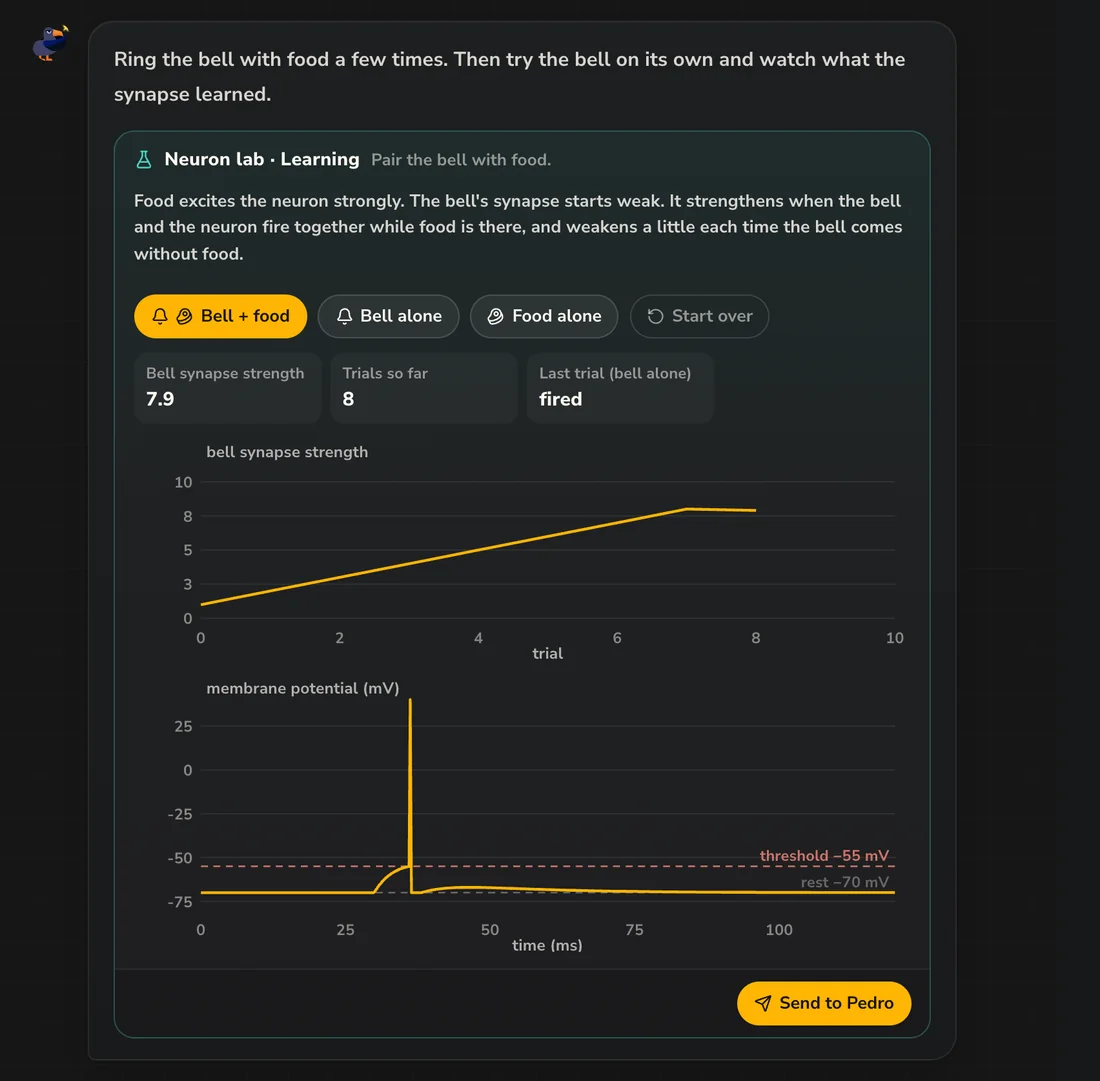
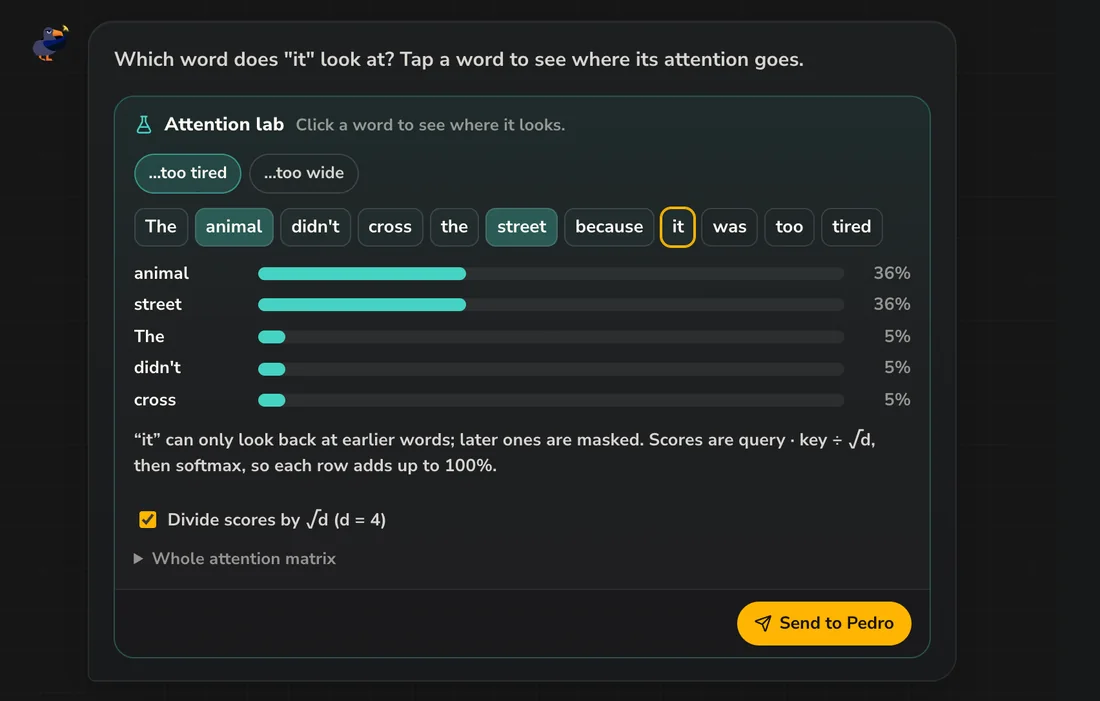
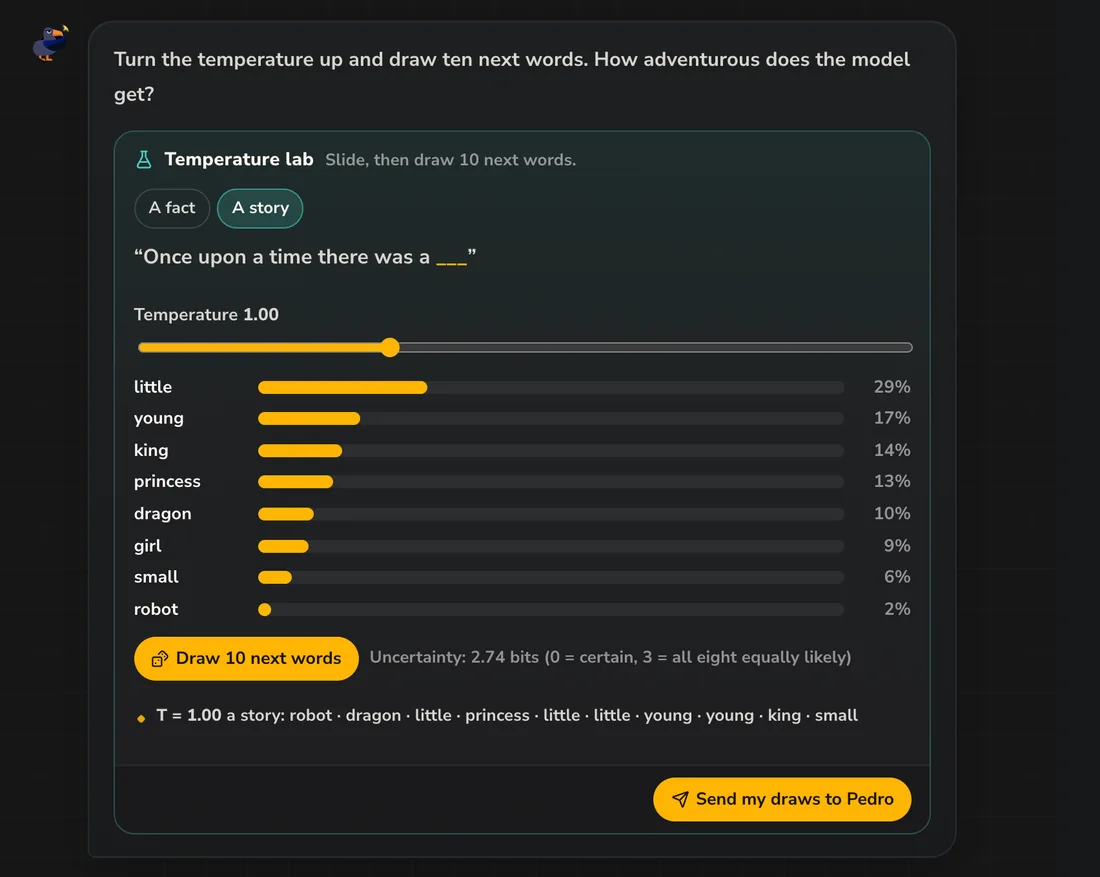
Pedro drops real experiments into the chat. You predict, run and tweak them, then send him what happened, and he coaches you from your own results.
| Capability | General AI chat | Study apps | Coast |
|---|---|---|---|
| Teaches from your own material | If you paste them in | Yes | Yes |
| Checks you understood before moving on | No | No | Yes |
| Knows your strength in every concept | No | Per flashcard | Yes |
| Remembers what clicked, across courses and years | No | No | Yes |
| Coaches you through real projects | Hands you the answer | No | Yes |
for universities
Cohort insight for educators, set up to your institution’s requirements. Now piloting with universities.
Coast is a personal AI tutor. You add your study material, and Pedro turns it into lessons, checks that you understand each section before you move on, and answers anything about your material. Everything you do builds your cognitive profile, so Pedro keeps getting better at teaching you.
Right now, university students: bring your material from any course and learn it with Pedro. We’re building toward a personal tutor for every student, at any level, and a platform that helps teachers see where their students struggle.
OMA is Coast’s memory architecture, and it has two parts. Student OMA is your cognitive profile: how strong you are in each concept, what clicked for you, where you got stuck, and everything you’ve worked on. Content OMA is a concept map of your sources. Pedro reads both before every reply, which is how he can teach you personally across courses and years.
General-purpose chatbots answer questions. Pedro teaches. He works from your own material, asks you questions instead of handing over answers, won’t move on until you’ve shown you understand, and remembers your learning as a structured profile rather than a chat history.
For each section you’ve studied, Pedro writes six questions from your own material, starting with a quick check and ending with exam-level problems. They focus on the concepts you got wrong or found hard. Each answer is graded against a worked solution and a marking scheme, and you can see the full solution once you’ve tried. Once you’ve finished a few sections, mixed sets combine their topics like a real exam, and finishing the course unlocks a final set across all of it.
Your files are private to you. Coast uses them only to build your own lessons, practice and answers: they are not shared with other users, not published, and never used to train or improve AI models, by us or by the AI providers we use. Delete a file or your account and it is deleted. Read more in our Privacy Policy.
Coast doesn’t review what students upload, so we rely on rights holders to tell us. If you are an author, publisher or institution and believe material you own was uploaded to Coast without permission, email privacy@coast.academy with the details listed in our Terms of Service. We remove the material and permanently delete it from our servers.
Coast is in private beta. Join the waitlist and we’ll email you a beta code when your invite is ready. Each code works once. Got one already? Create your account.
Yes. We’re launching with a generous free tier. A Pro plan for heavier use will follow, priced for student budgets.
Your study material as PDF or PowerPoint files: your own notes, and material you’re allowed to use for your own study. Coast reads the figures as well as the text, so diagrams show up in your lessons. Your files stay private to you and are never used to train AI.
Private tutoring has always been the most effective way to learn, and a privilege. We’re starting with university students and building toward a tutor for anything anyone wants to understand.